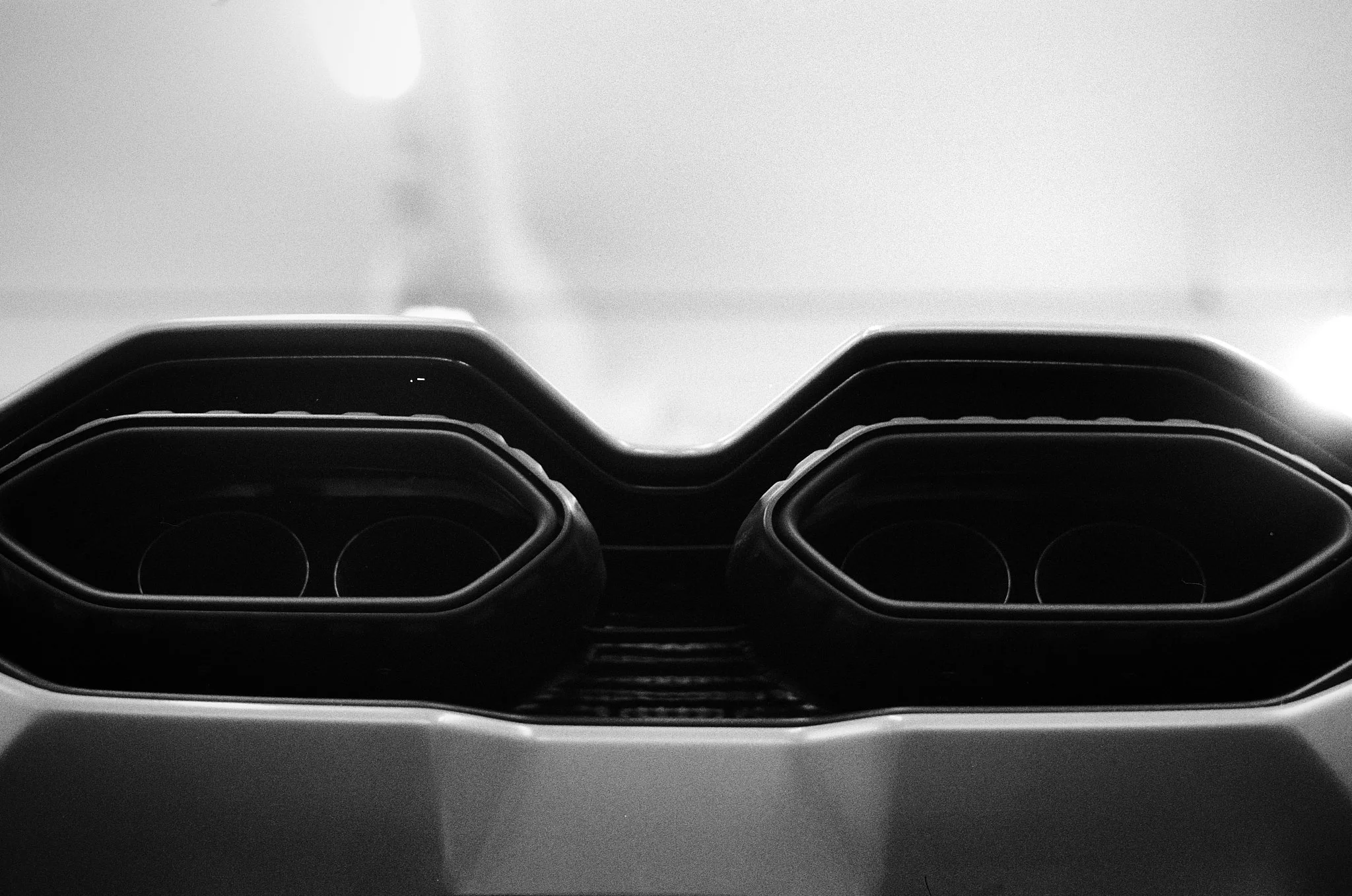
I was at Lamborghini Service to photograph the workshop for their social channels. The brief covered the space, the mechanics and the details of the cars, with the main shoot carried out digitally. Alongside that work, I asked if I could shoot something for myself on film.
I brought my Rolleiflex SL35, a Planar 50mm f/1.8 and a roll of Kodak T-Max 400. Between the digital photographs, I explored the workshop with that combination, following the light and whatever caught my attention.
Why I chose Kodak T-Max 400
T-Max 400 is a film I trust. From my experience, it handles overexposure well, gives me the sharpness I want and has a grain structure I enjoy. There is also something about its rendering that reminds me of photographs from the seventies, especially when I work with strong contrast.
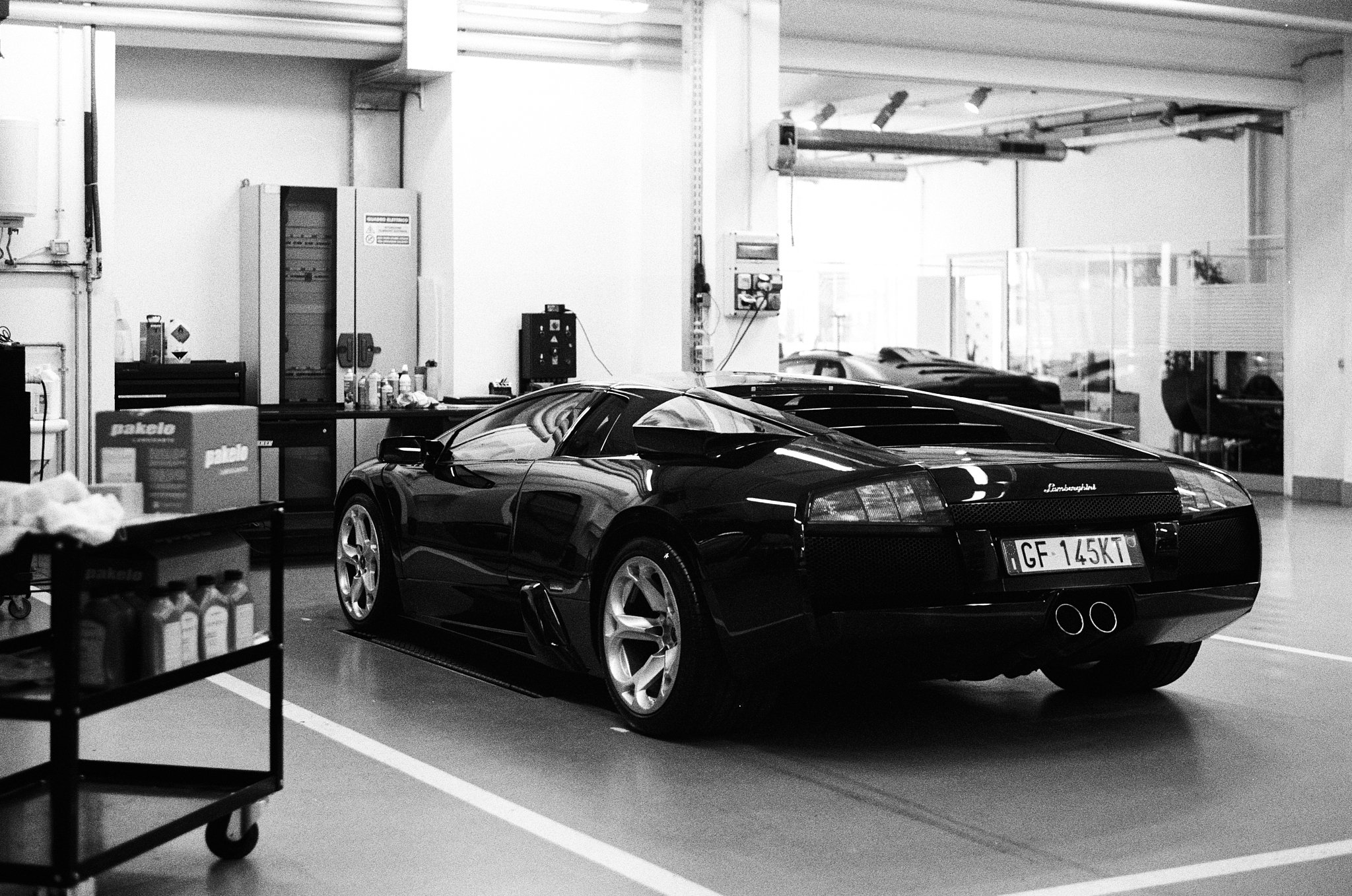
For this shoot, I was interested in how it would describe the workshop: dark bodywork, wheels, metal surfaces and the fluorescent lights overhead.
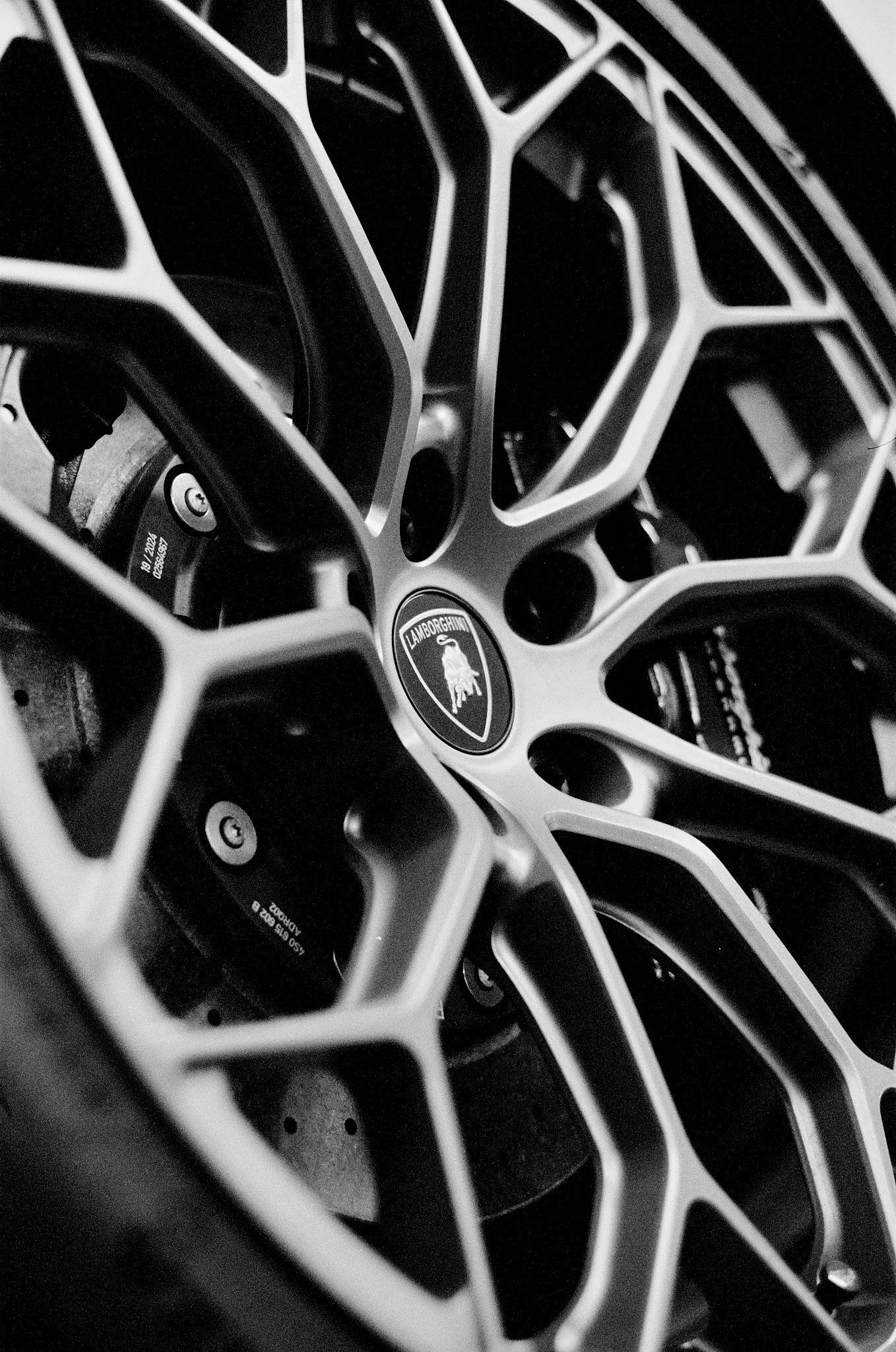
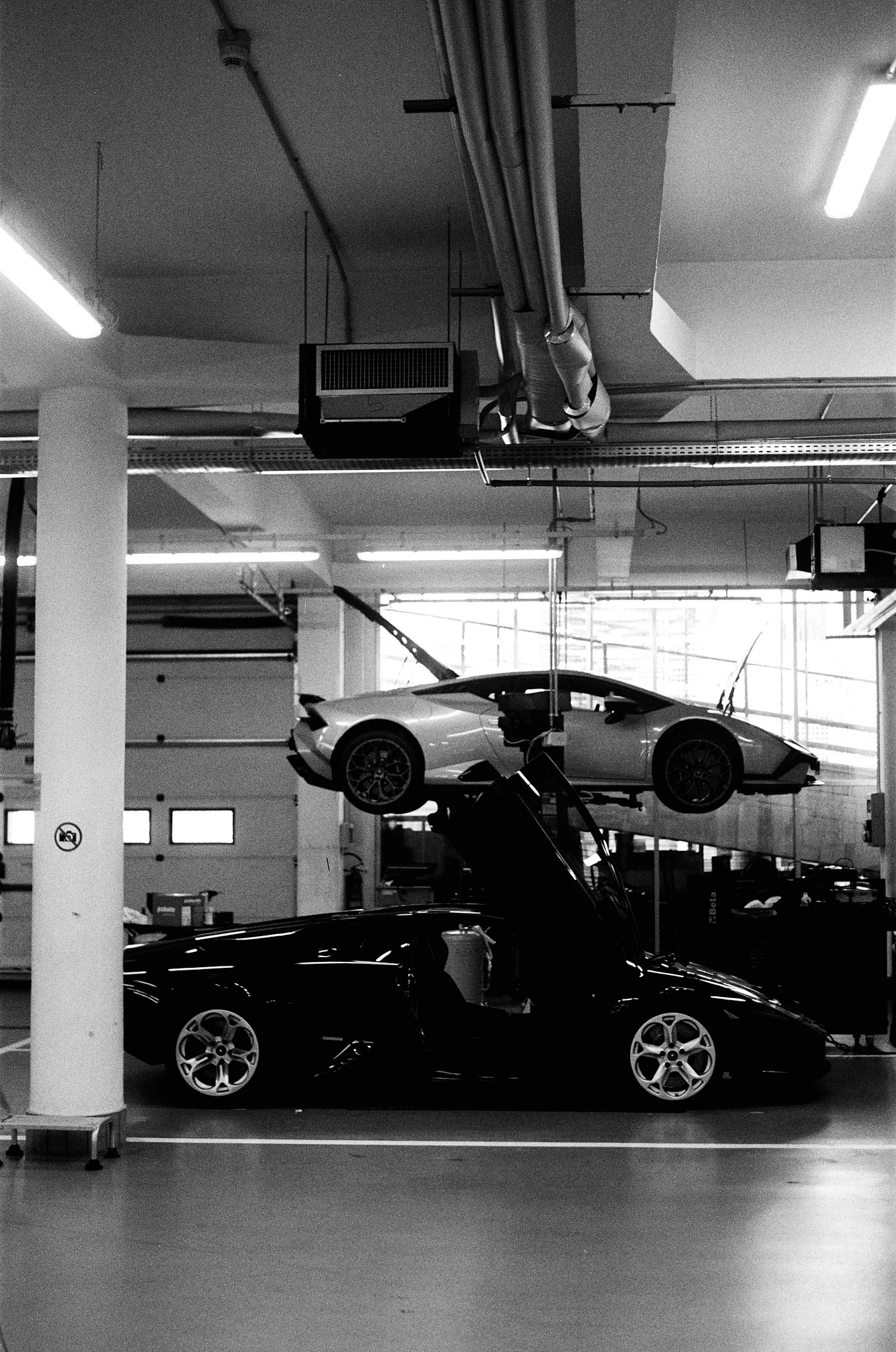
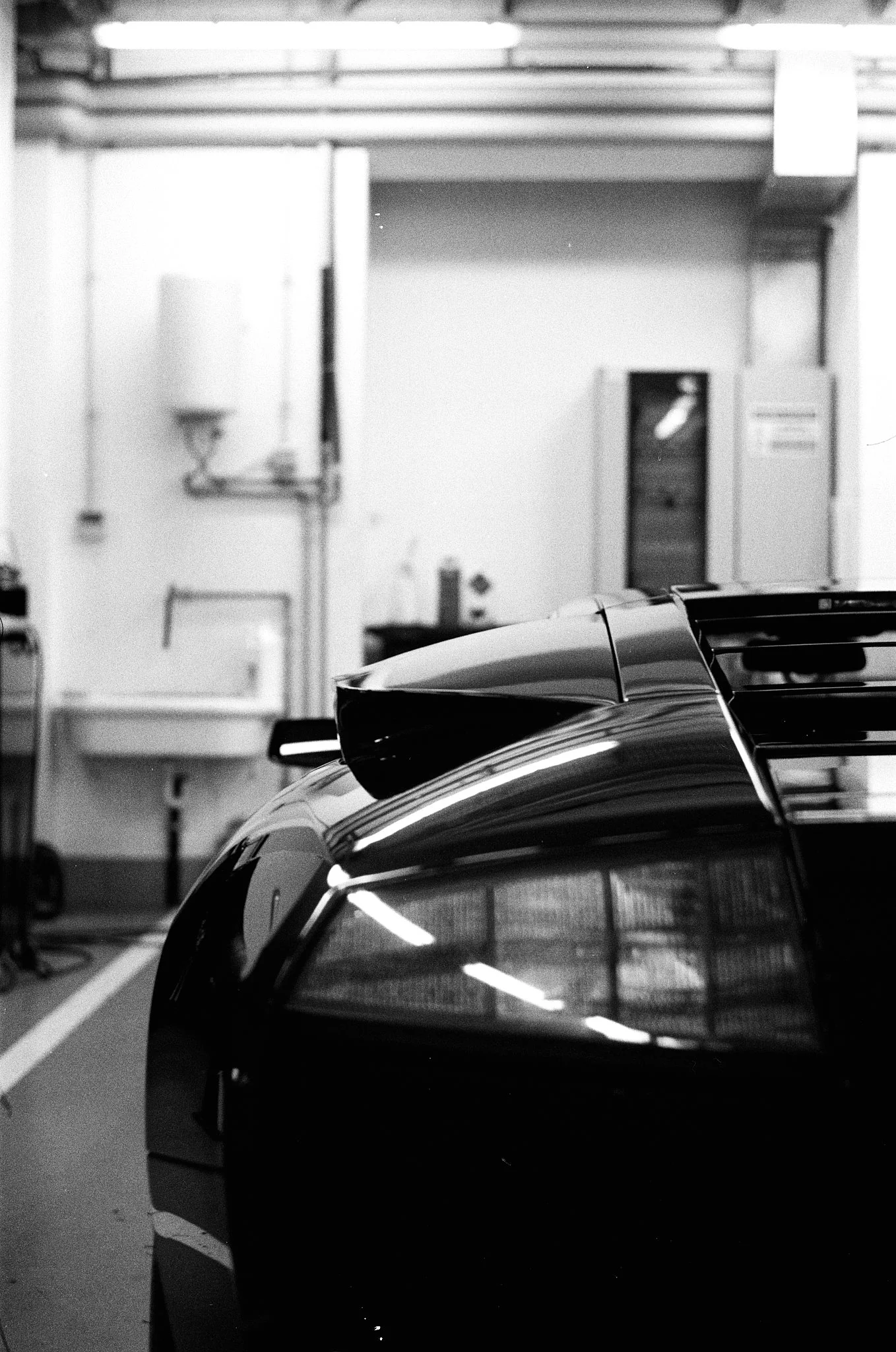
Colour was already part of the digital coverage. For these photographs, I wanted to concentrate on shapes, reflections and the way light moved across the cars. Black and white suited the way I was looking at the space.
Working under the workshop lights
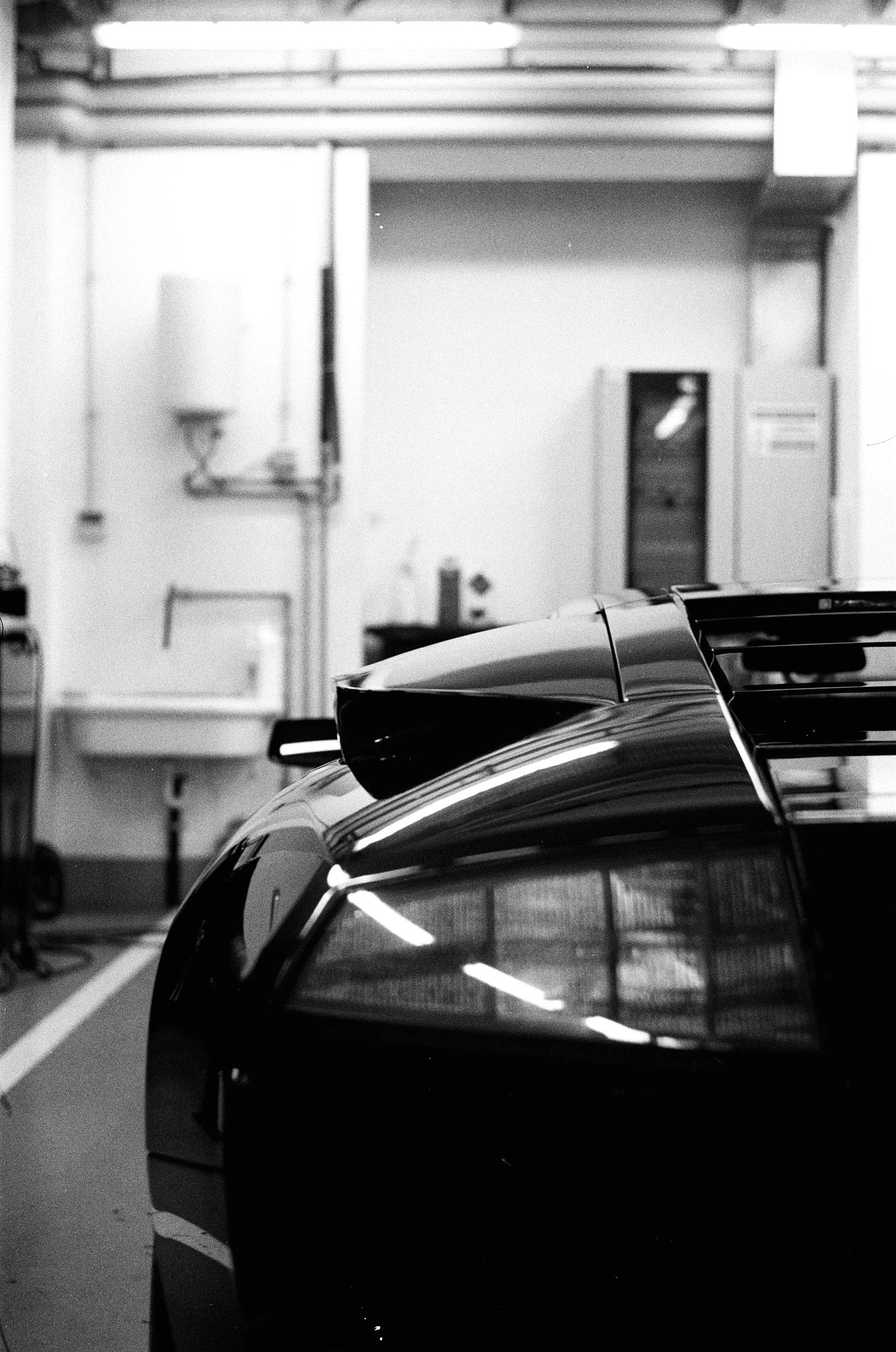
Everything was photographed using the existing workshop lighting. I worked around the fluorescent lights, looking for reflections on body panels and small areas of light that brought out a particular detail.
Exposure took some patience. With black cars and grey wheels, I found it difficult to rely entirely on the Rolleiflex’s built-in meter. Its stop-down metering also made the needle harder to see in the darker parts of the workshop.
I used my Sekonic Flashmate L-308X for most of the readings. I would move close to the area I wanted to photograph and take around three measurements before deciding on an exposure. That gave me more confidence when moving between the brighter work areas and the shadows around the cars.
For this roll, I worked at EI 800 and had the film push processed by one stop.
A Rolleiflex SL35 and one 50mm lens
The Planar 50mm f/1.8 is currently my only lens for the Rolleiflex, so the whole series was made with it.
I shot everything handheld, generally between 1/60 and 1/125 second, with the aperture mostly at f/2 or f/2.8. I find focusing accurately at f/1.8 more difficult, so closing down slightly was a useful compromise.
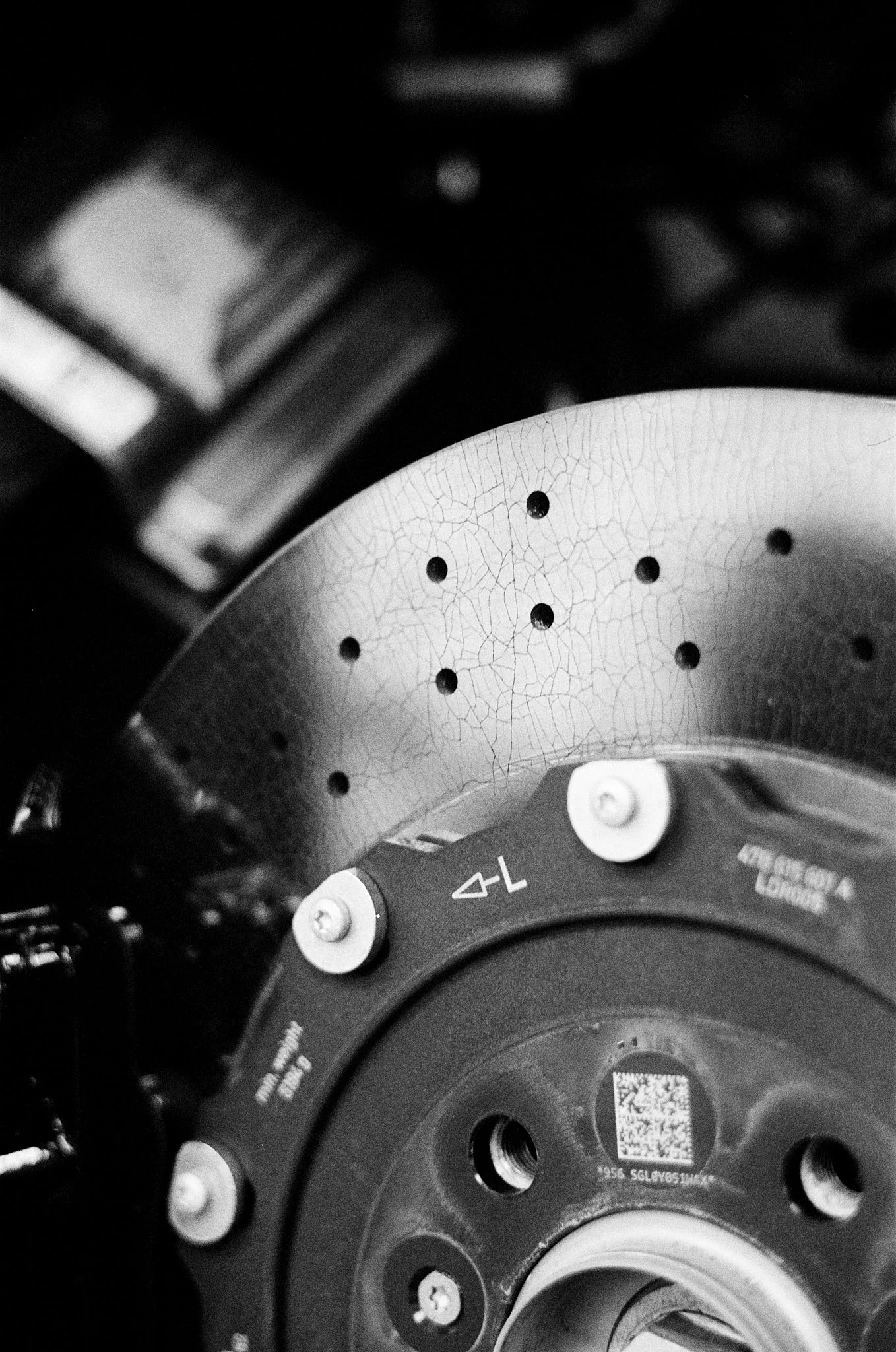
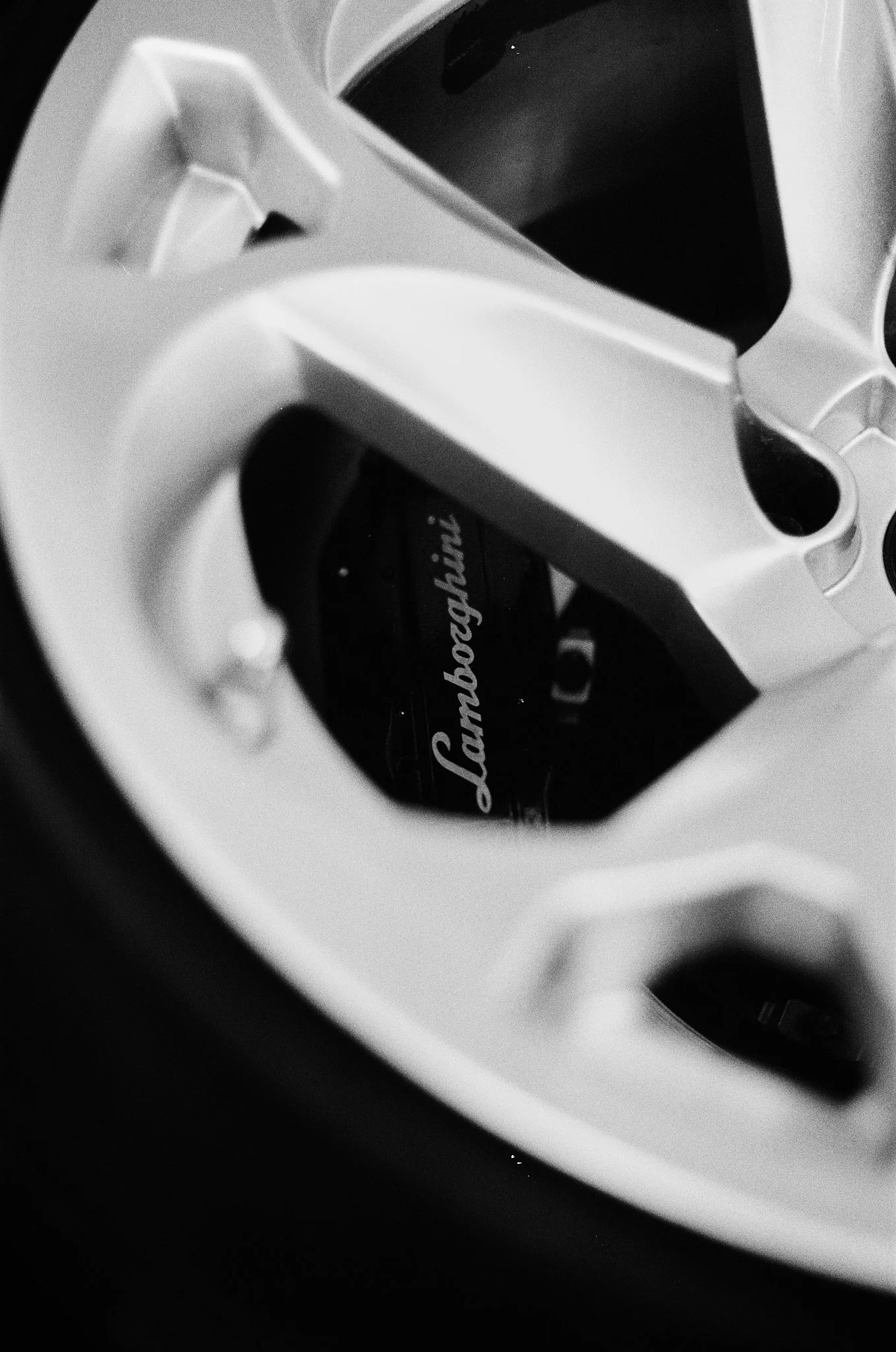
Working with one focal length meant moving around to find the composition. Sometimes I stepped closer to isolate a wheel or a mechanical detail; elsewhere, I moved back to include more of the workshop.
I enjoy that process. Shooting fully manually involves a lot of technique, but it also gives me freedom. Choosing the exposure, finding focus and deciding when to release the shutter are all parts of photography that I like being responsible for.
Following curiosity through the workshop
I did not have a planned sequence for the film photographs. The assignment gave me subjects to work with, but my personal approach was led by curiosity.
I moved between the cars, the people and the space, looking for interesting light. A reflection could draw me towards a body panel, then a wheel or a wider view would catch my attention.
Photographing cars in a service environment gives me different things to look at. The workshop places them among lifts, tools and the people who maintain them. I wanted the photographs to hold onto that context while leaving room for closer, more abstract details.
From the negatives to the final edit
Speed Photo Bovisa handled the development, including the one-stop push, and supplied the scans as TIFF files.
What pleased me most in the scans was the contrast, the detail and the overall rendering of the workshop. The combination gave me a starting point I was happy with.
My editing for the series focuses on light adjustments and local masks, refining the balance within each frame and guiding attention towards the details that made me take the photograph.
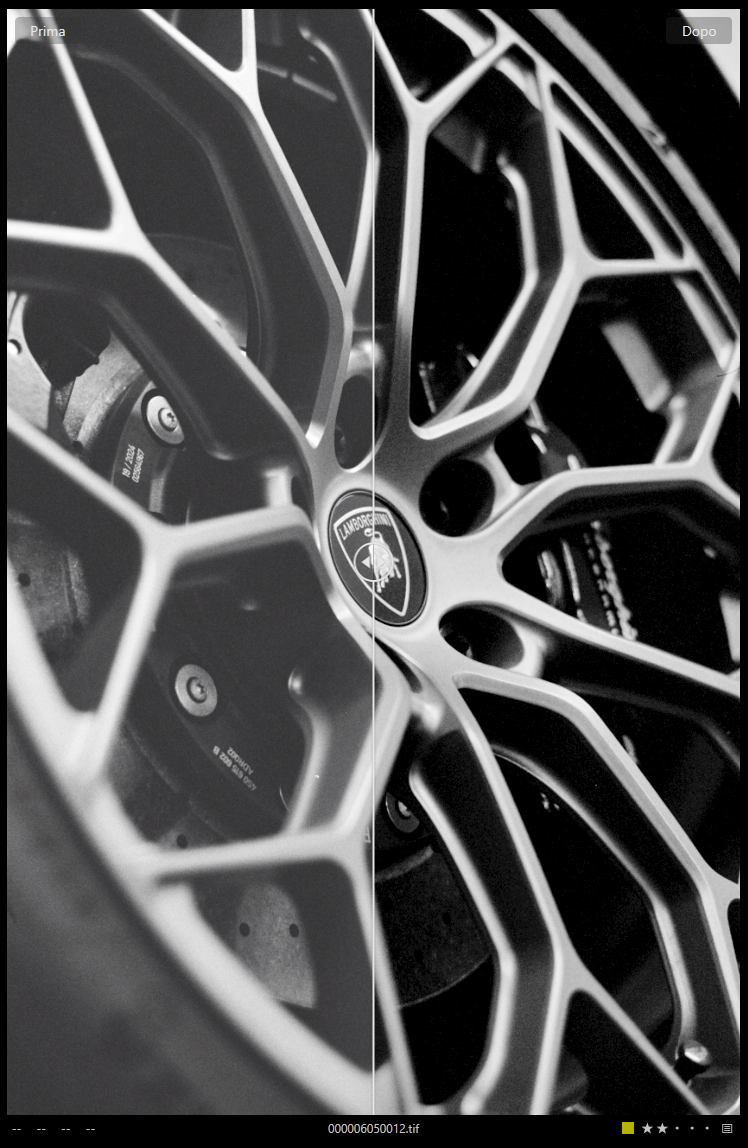
What I would change next time
I would happily use Kodak T-Max 400 for this kind of automotive photography again.
Next time, I would bring a tripod to give myself more options in the darker areas. I would also like to try a 35mm lens for wider photographs of the cars and their surroundings.
My main advice after this shoot is to take time with the light readings. An external meter made the process easier for me, particularly around dark bodywork and in places where the Rolleiflex’s needle was difficult to read.
Then, patience. I got the most out of the workshop when I gave myself time to move, look and find the angle where the light made the photograph work.
